Welcome to GROSSMAN ON TRUTH!
We provide truth and equip men and women with mental tools to enable resiliency in the face of adversity.

The ON TRUTH newsletter
We promise not to SPAM you.
Best Selling Books
OUR PARTNERS







We provide truth and equip men and women with mental tools to enable resiliency in the face of adversity.
We promise not to SPAM you.

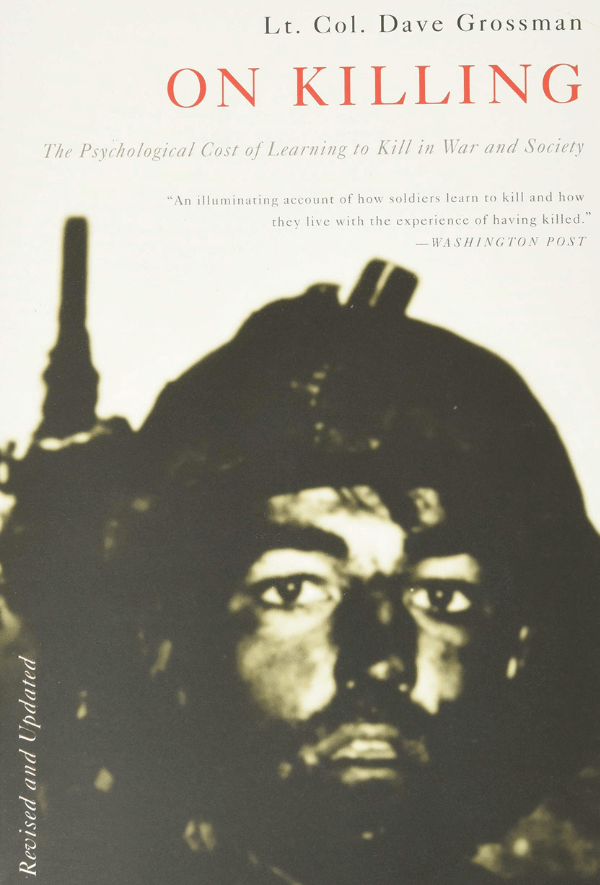
In their description of Lt. Col. Dave Grossman, Slate Magazine said, “Grossman cuts such a heroic, omnicompetent figure, he could have stepped out of a video game.” He has five patents to his name, has published four novels, two children’s’ books, and six non-fiction books to include his “perennial bestseller” On Killing (with over half a million copies sold), and a New York Times best-selling book co-authored with Glenn Beck.
He is a US Army Ranger, a paratrooper, and a former West Point Psychology Professor. He has a Black Belt in Hojutsu, the martial art of the firearm, and has been inducted into the USA Martial Arts Hall of Fame.
Col. Grossman’s research was cited by the President of the United States in a national address, and he has testified before the U.S. Senate, the U.S. Congress, and numerous state legislatures. He has served as an expert witness and consultant in state and Federal courts. He helped train mental health professionals after the Jonesboro school massacre, and he was also involved in counseling or court cases in the aftermath of the Paducah, Springfield, Littleton and Nickel Mines Amish school massacres.
Col. Grossman has been called upon to write the entry on “Aggression and Violence” in the Oxford Companion to American Military History, three entries in the Academic Press Encyclopedia of Violence, Peace and Conflict and has presented papers before the national conventions of the American Medical Association, the American Psychiatric Association, the American Psychological Association, and the American Academy of Pediatrics.
Since his retirement from the U.S. Army in 1998, he has been travelling full time as one of our nation’s leading trainers for military, law enforcement, mental health providers, and school safety organizations.
Today Col. Grossman is the director of Grossman On Truth, LLC (www.GrossmanOnTruth.com). In the wake of the 9/11 terrorist attacks, he has written and spoken extensively on the terrorist threat, with articles published in the Harvard Journal of Law and Civil Policy and many leading law enforcement journals, and he has been inducted as a “Life Diplomate” by the American Board for Certification in Homeland Security, and a “Life Member” of the American College of Forensic Examiners Institute.
 Kathy Lohrding started working for Col. Grossman in 2014. She retired as police sergeant with the Mascoutah Police Department, having worked there for 23 years. Kathy also worked as a paramedic in E. St. Louis for over a decade. Her career fields were in service for others – the most vulnerable and those in need of help.
Kathy completed a Bachelor of Science degree from St. Louis University in Criminology. She has several other degrees and a love of financial matters.
When not at work, Kathy enjoys life with her husband, Mark, and their dogs. She can be found in her “farmhouse” during her free time weaving and focusing on her ministry of encouragement through card-making.
Kathy has a zest for life and strives to finish the race well and helping others to do the same.
 Mike Baldwin joined the Grossman team after a distinguished law enforcement career in Arizona. Over his 20 plus year career, Mike served in a number of roles: Patrol, Field Training Officer, SWAT Operator, Sergeant, and Lead Detective in the Major Felons Unit. As a Detective, Mike honed his craft and became arguably his department’s best interviewer and gained admissions and confessions from suspects who committed a variety of crimes. Over the years he received multiple departmental awards, citations for outstanding police work, and the respect of his peers. Mike served as an example and mentor to several young detectives and found this experience to be extremely rewarding.
For seven years, Mike served as the Sheepdog for his church home in AZ. He started a volunteer security team at his local church in which church members and guests (Sheep) were watched over by the security team (Sheepdogs) to protect them against the Wolf. This ministry continues in his absence.
After obtaining an MBA with an emphasis on Strategic Innovation, Mike retired from law enforcement and joined the Grossman team. He hit the ground running on day 1 and has proven to be a valuable addition. His strategy is to focus on the acronym WIN (What’s Important Now). Mike handles the day-to-day operation of our business and interacts with people and agencies wishing to schedule a presentation.
Mike is a devoted husband, father, and Christian man who seeks to honor God in what he does. (Proverbs 22:1 “A good name is rather to be chosen than great riches”). He is willing to speak to groups about resiliency and scars collected as a result of his career in law enforcement.